Published
moonMoon
Final image
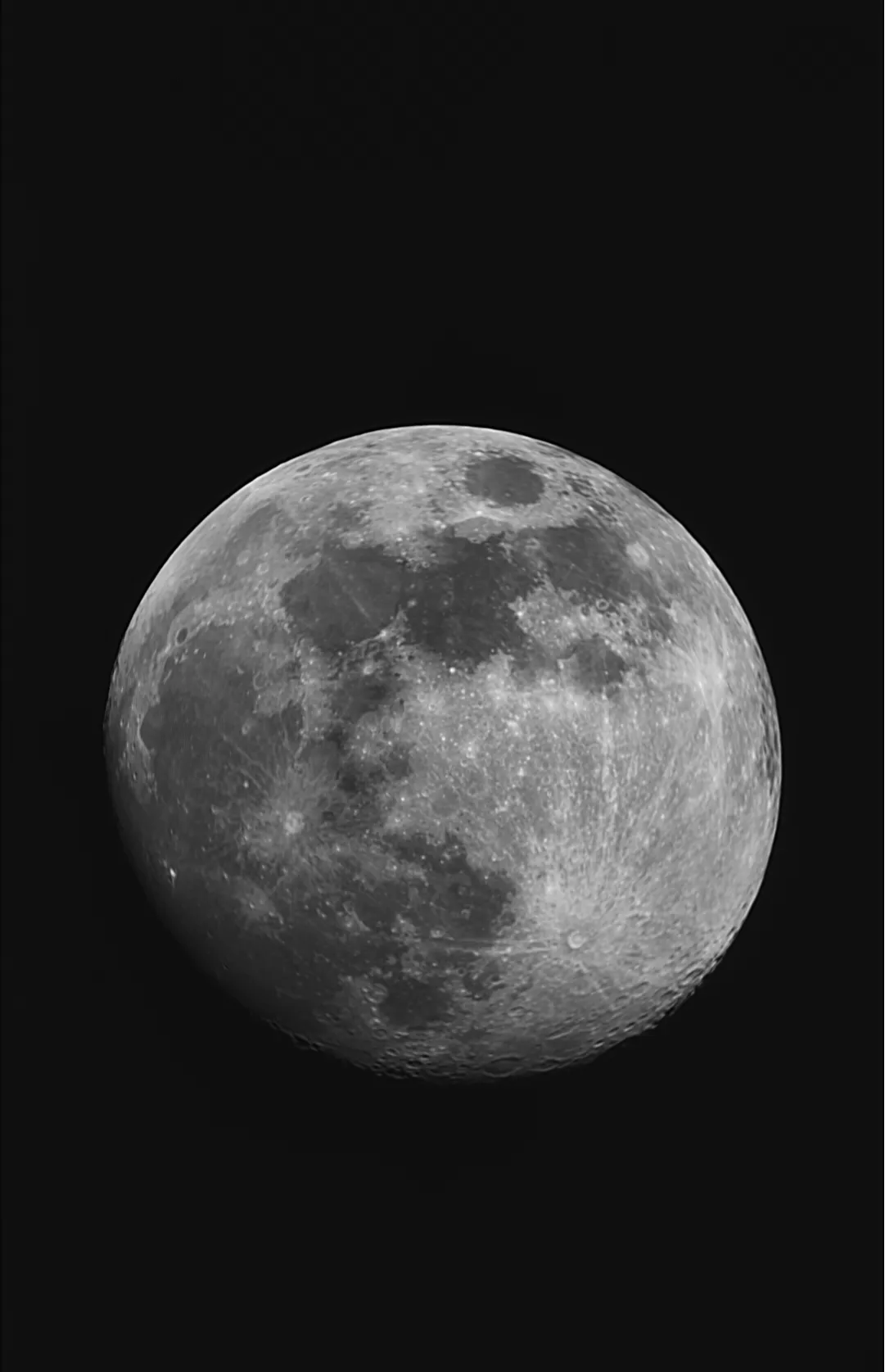
Pinch the image to zoom in on star shapes, gradients, and noise. Open inspect for fullscreen detail and manual controls.
Feedback welcome
2 comments2 annotationsLeave a note or mark a specific area of the image.
Write-up
The target
The Moon, our planet's closest celestial neighbor, has captivated stargazers and astrophotographers alike for centuries. Its majestic presence in the night sky offers a canvas for both amateur and professional photographers to explore its textures and craters in rich detail. This particular capture, taken in Salem, New Hampshire, under Bortle class 6 skies, stands out as it showcases the Moon's rugged surface, an ever-fascinating subject full of intricacies that tell the story of its formation and history.
Photographing the Moon is special not just for the beauty it imparts but also for how accessible it is to everyone. Whether peering through a telescope or capturing images with a camera, the Moon invites enthusiasts of all levels to observe its grandeur. This shot captures the essence of that celestial wonder, inviting viewers to appreciate the familiar yet mysterious beauty of our lunar companion.
Distance and light
The Moon orbits Earth at an average distance of about 238,855 miles (384,400 kilometers). The light we see from the Moon today takes approximately 1.28 seconds to reach us, which is relatively swift compared to the light from more distant objects in the universe. This proximity means that every observer on Earth experiences the Moon's light almost instantaneously, connecting us directly to its surface with each gaze upward into the night sky.
Integration data
Moon
- Files
- 1 file
- Storage
- 281 MB
- Estimated S3 monthly cost
- ~< $0.01/mo S3
Folders
- (root)1 · 281 MB
File types
- image/fits1 · 281 MB
Gear
- S50Primary
1 item
- Telescope / OTA
ZWO Seestar S50
Discussion