Published
m42m42
Final image
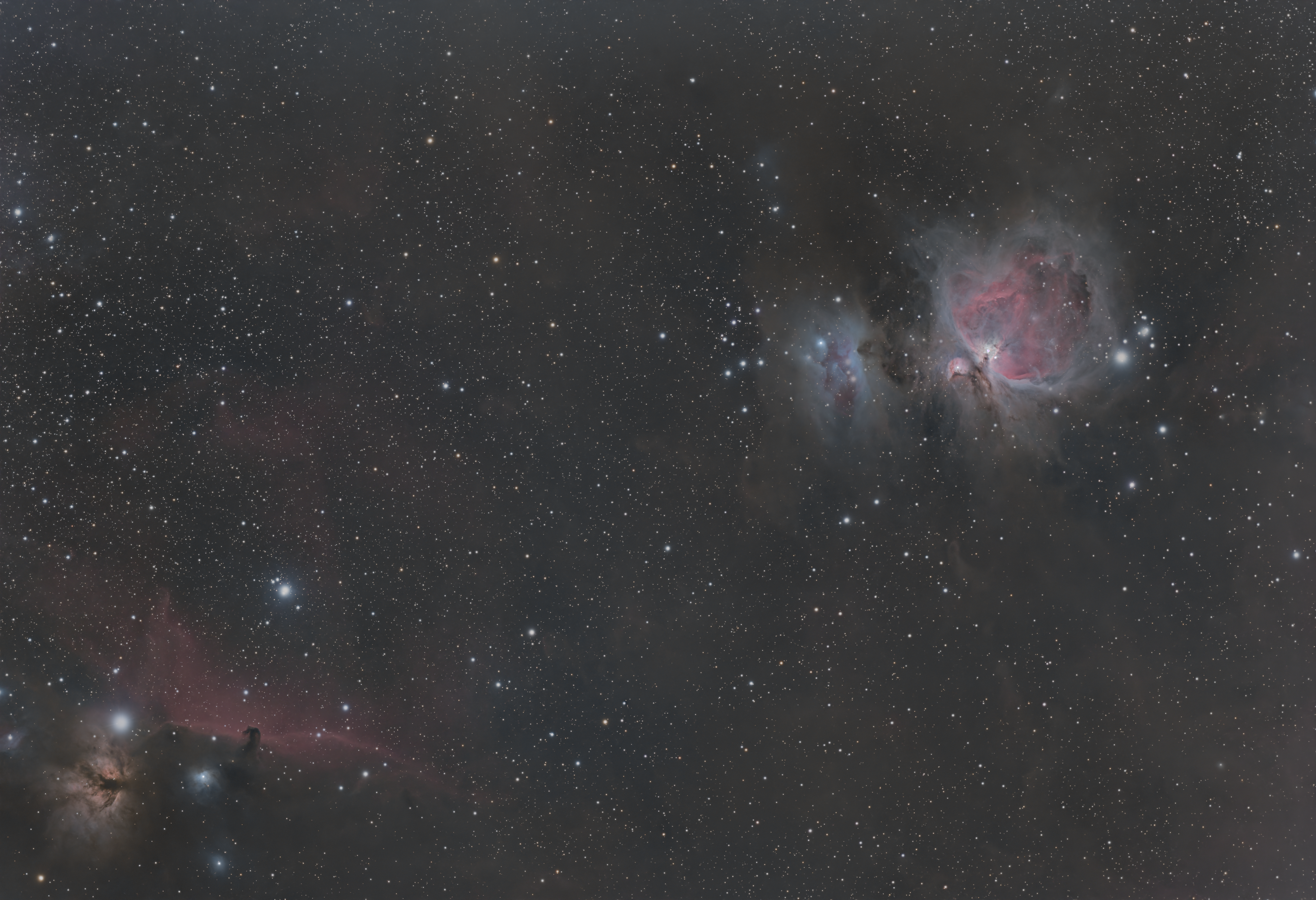
Pinch the image to zoom in on star shapes, gradients, and noise. Open inspect for fullscreen detail and manual controls.
Feedback welcome
0 comments0 annotationsLeave a note or mark a specific area of the image.
Write-up
The target
The Orion Nebula, also known as M42, is one of the most captivating sights for both stargazers and astrophotographers alike. This stellar nursery is located in the Milky Way, teeming with vibrant colors and intricate structures formed by gas and dust. It holds a special place in the hearts of astronomers because it provides a glimpse into the processes that give birth to stars. Captured from a Bortle 6 location in Salem, NY, this image encapsulates the nebula's rich color palettes and swirling nebulosity, expressed beautifully through the unique characteristics of the scene.
Distance and light
The Orion Nebula is approximately 1,344 light-years away from Earth, nestled within the Orion constellation. For stargazers peering up at the night sky, this means that the light we see from M42 today has been traveling across the cosmos for over a millennium. It's a reminder of the vast distances that exist beyond our solar system, where light and time weave together to create breathtaking cosmic displays.
Integration data
m42
- Files
- 250 files
- Storage
- 12 GB
- Estimated S3 monthly cost
- ~$0.28/mo S3
Folders
- lights190 · 9.2 GB
- biases20 · 995 MB
- darks20 · 995 MB
- flats20 · 995 MB
File types
- image/fits250 · 12 GB
Gear
- Redcat RigPrimary
3 items
- Camera
ZWO ASI2600MC Air
- Mount
ZWO AM5
- Telescope / OTA
William Optics RedCat 51
Discussion